
In today’s rapidly evolving transportation landscape, ensuring safety is non-negotiable. Enter AI and ML technologies, the vanguards of a crucial mission to make our roads and transit systems safer than ever before. From real-time alerts in advanced driver assistance systems to detecting pavement distress and preempting emergency vehicle routes, AI is revolutionizing safety measures across the board. In the skies, too, AI is optimizing flight schedules to minimize delays and enhance the overall travel experience while prioritizing passenger safety. Join us as we delve into part two of this series to talk about the transformative impact of AI-enhanced safety measures in road and transit systems, exploring how these innovations are reshaping the future of transportation for the better.
AI-Enhanced Safety Measures for Road and Transit
Safety is paramount in transportation, and AI and ML technologies are at the forefront of this critical mission. From advanced driver assistance systems that provide real-time alerts to automated systems that detect pavement distress, these technologies are setting new safety standards on our roads, ensuring passenger safety, and promoting road safety.
In the skies, AI is minimizing flight delays, enhancing the travel experience, and ensuring that the transportation industry is not only efficient but also safe for its passengers.
Automated Pavement Distress Detection
The integrity of our roadways is vital for safety, and AI-driven systems are becoming indispensable tools for detecting pavement distress. These systems can identify potholes and other infrastructure issues, ensuring that road maintenance is both timely and efficient.
By improving road maintenance allocation efficiency, AI contributes to smoother, safer roads for everyone.
Emergency Vehicle Preemption
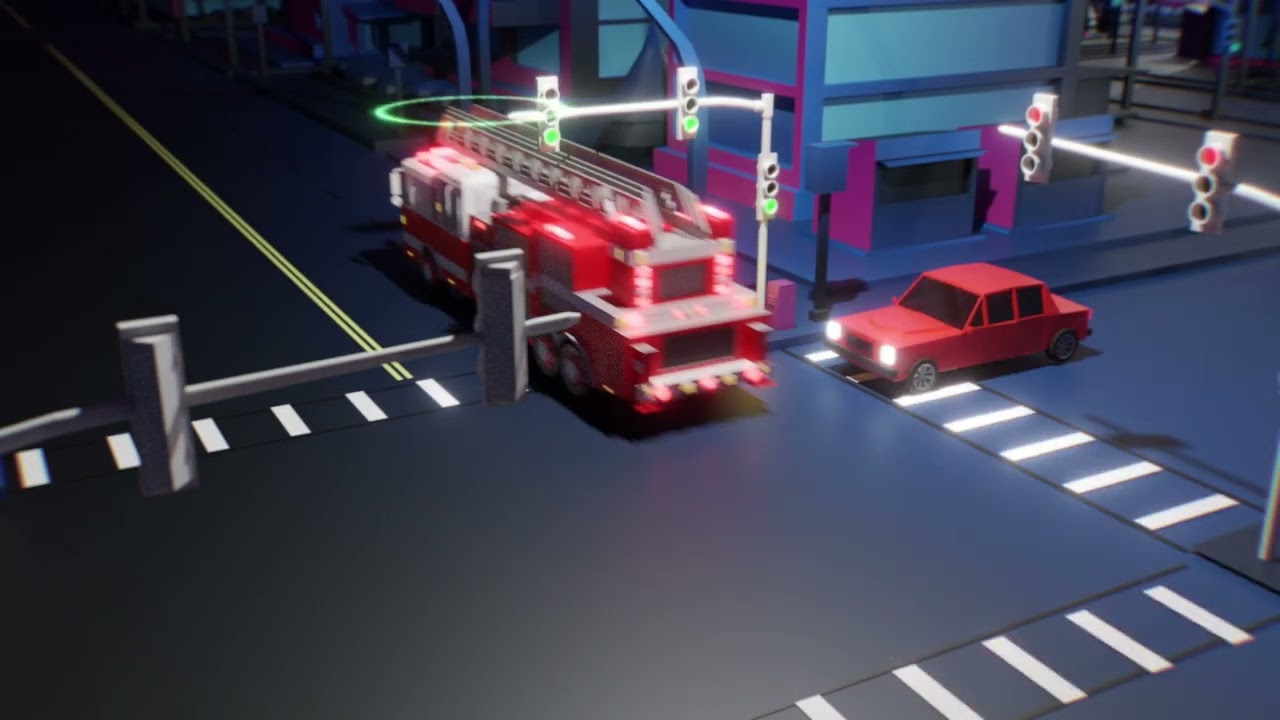
Imagine leveraging AI and machine learning to optimize emergency vehicle response times and ensure the safest routes for first responders. A decade ago, this concept might have seemed like a distant dream, but today, with the integration of emergency vehicle preemption (EVP) technology, it’s a tangible reality. AI-driven systems now predict optimal routes, preempting traffic signals to grant first responders a consistent green light throughout their journey. This not only accelerates their arrival at destinations but also significantly enhances safety. A study showed that LYT.emergency saw up to a 70% reduction* in side impact collisions *(Sources: US DOT & FHWA).
Smart Urban Planning with AI Transportation Systems
AI and ML are the silent conductors orchestrating the symphony of urban transportation. These technologies are crafting smarter, more responsive transportation networks by analyzing interactions between vehicles, pedestrians, and city infrastructure. These advancements are not isolated; they encourage cross-departmental collaboration and enable planners to tackle modern challenges efficiently, laying the groundwork for cities of the future.
Optimizing Public Transit Routes
Big Data is revolutionizing public transit by:
- Tailoring routes to the unique commuting patterns of different areas
- Harnessing data from mobile phones and geocoded social media records
- Optimizing transit systems to serve communities better
- Making public transportation a more attractive and efficient choice for urban dwellers.
Eco-Friendly Traffic Solutions
AI-driven traffic solutions are paving the way for a greener tomorrow. These smart solutions demonstrate how technology can be harnessed to not only enhance our daily lives but also protect the planet. Here are some benefits of AI in traffic management:
- Eco-friendly route optimization
- Data-driven fleet management
- Lower carbon emissions
- Improved energy efficiency
- Smoother city traffic
As we conclude our exploration of AI-enhanced safety measures in road and transit systems, it’s clear that technology is a game-changer in ensuring a safer and more efficient transportation landscape. Solutions like LYT.emergency and LYT.transit exemplify this transformation, offering solutions that optimize emergency vehicle routes and tailor public transit for better community service. With AI at the helm, we’re witnessing unprecedented advancements in road maintenance, emergency response, urban planning, and eco-friendly traffic management. The future holds even more promise as these technologies continue to evolve, making our roads safer, our transit systems more reliable, and our communities better connected.
Interested in learning more about how LYT is transforming the transportation industry, schedule a personalized demo with one of our experts today.